Your First Match on the Radio: Listen for the Shape of Play
A first match on the radio is easier to follow when you track possession, phases, and changes in tempo instead of trying to picture every movement.
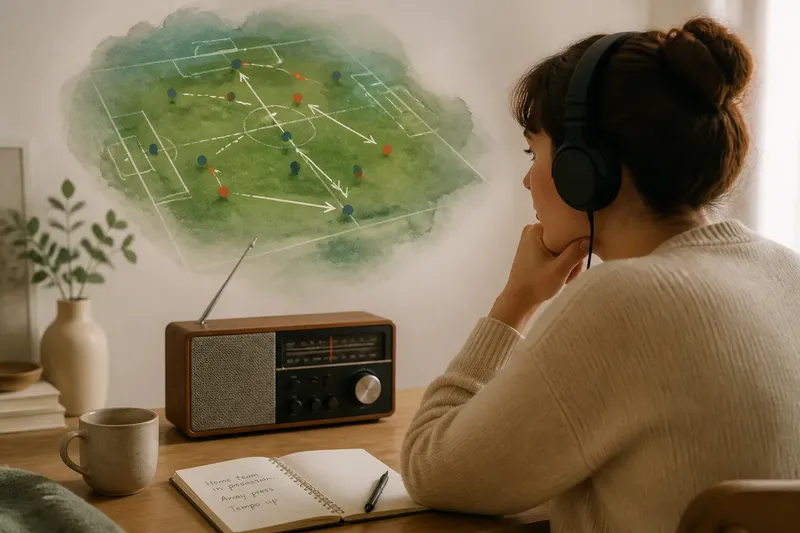
The common mistake on a first match on the radio is trying to build a complete picture from every name and detail. That effort costs you the thread of play: while you puzzle over where one player is, possession may already have changed. A better first match on the radio starts with a simpler question: which side has the ball, and what is happening to the phase?
A phase is a stretch of play with a recognizable purpose, such as carrying the ball forward, defending a sustained attack, or restarting after a stoppage. You do not need to know every rule or position to hear those shifts. The aim is to follow the match’s changing shape, not to create a perfect mental diagram.
Three listening approaches
There are three useful ways to listen: track possession, follow phases, or focus on commentary cues. Each asks for a different kind of attention, and each suits a different listener. You can switch approaches as the game unfolds rather than committing to one for the whole broadcast.
Possession first
With this approach, keep a running sense of which team controls the ball. Listen for the moment the commentator says a team has won it, lost it, intercepted it, or forced a turnover. Possession means control of the ball, not necessarily control of the match; a side can hold the ball without moving toward a scoring chance.
This is the easiest starting point if the teams, players, or rules are unfamiliar. It gives the action a basic sequence: one side has the ball, the other tries to regain it, and a change of possession resets the immediate contest. It is less helpful if you treat every possession as equally threatening, since some begin deep in a team’s own area while others start close to a scoring opportunity.
Phases first
Following phases means listening for what each side is trying to do. A team might build an attack patiently, make a quick counterattack after winning the ball, or protect a lead by keeping possession away from danger. The names and details vary by sport, but the larger pattern—advance, attack, defend, restart—often remains audible.
This approach suits a listener who already recognizes the basic rules and wants to understand the match’s rhythm. It helps explain why a long spell without a shot or score can still matter: one team may be pressing forward while the other is being pushed back. The risk is assigning a tactical purpose too soon. Let the commentator’s descriptions and the sequence of play support your interpretation.
Commentary cues first
Here, you listen closely to the broadcaster’s vocabulary, tone, and pauses. Words such as “space,” “under pressure,” or “back to the goalkeeper” can tell you about the situation even when you cannot locate every player. A sudden change in vocal energy often signals a chance, a mistake, or a decisive defensive action.
This works well if you enjoy language and want a low-pressure entry into an unfamiliar sport. But excitement alone is not a map. A dramatic call may describe a brief moment rather than a sustained change in the match, so connect the cue to who has possession and what happens next.
Choose your starting lens
Choose the approach that asks the least of your attention at first. If you are new to the sport, start with possession. If you know the rules but lose track of why play shifts, follow phases. If a busy description leaves you confused, listen for recurring commentary cues and use them to orient yourself.
You can also match the approach to the broadcast. A commentator who regularly names the player on the ball and the team in control makes possession easier to track. One who explains movement and pressure gives more support for following phases. If the broadcast assumes specialist knowledge, do not treat every unfamiliar term as essential; hold on to the plain-language clues around it.
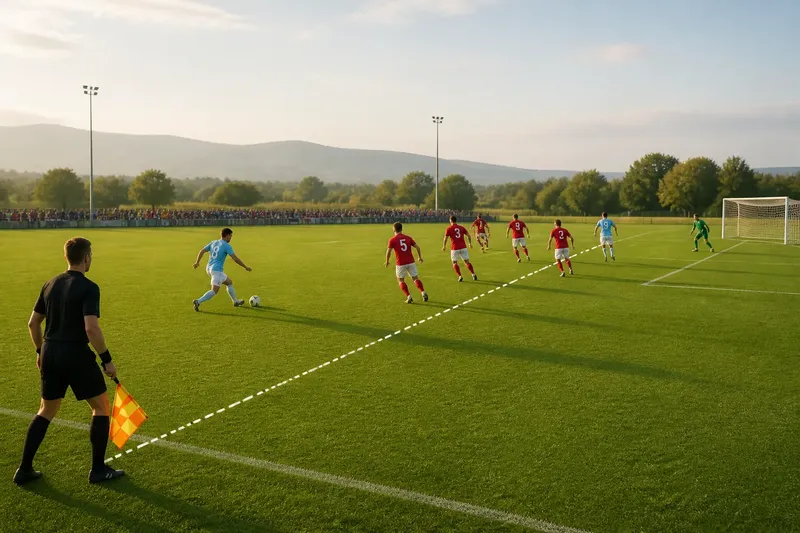
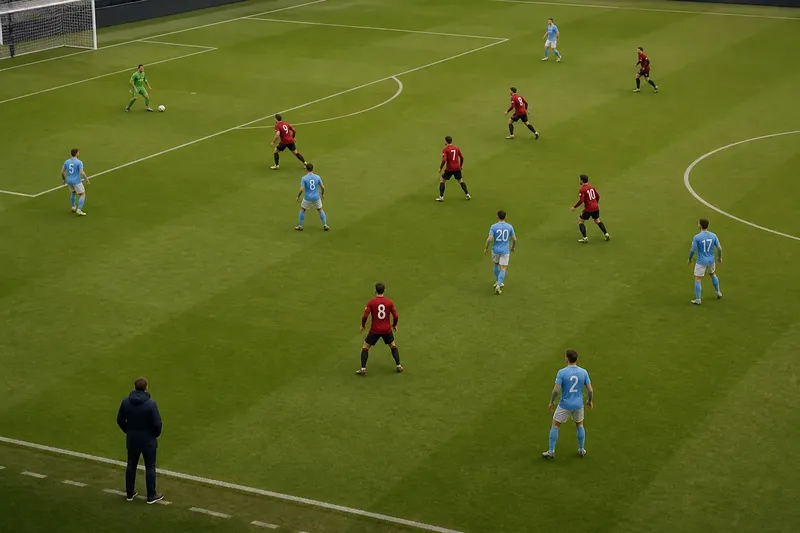
Say you tune in midway through a soccer match and hear that the home side has recovered the ball, moved it toward the other team’s goal, and then passed it backward under pressure. Start by noting that possession changed, then notice that the attack lost forward momentum. You do not need to identify every player to follow the observable result: the defending side has time to reorganize, and the home side must build again.
Hear the transitions
Changes of possession are useful landmarks because they divide the action into manageable stretches. Listen for the cause as well as the change: a tackle, a missed pass, a save, a clearance, or a restart can each send the match in a different direction. The cause helps you understand whether the new possession began through deliberate control or because the previous attack broke down.
After a turnover, ask two small questions: did the new side move forward quickly, and did the opponent recover or remain exposed? A quick counterattack can make a brief possession dangerous. A slower move may let both teams settle into a more organized shape. These are listening observations, not conclusions about which team is playing better.
Restarts also help reset your attention. A free kick, throw-in, corner, kickoff, or equivalent stoppage gives the commentator a chance to identify location and participants. Use that information as a fresh anchor rather than trying to reconstruct everything that happened before the break.
What should you listen for?
How do I follow an unfamiliar sport?
Start with the score and the basic objective, then listen for who has possession and what action restarts play. A short rules explainer from the broadcaster can clarify terms, but you can leave advanced tactics aside until the match’s basic rhythm makes sense.
What does a change of possession tell me?
It tells you that control has shifted, but not whether the new side has an advantage. Listen for where the ball is, whether the team moves forward, and how quickly its opponent responds.
Should I keep notes during a live broadcast?
Only if notes help you stay engaged. A few words such as “away team pressing” or “home side countering” can preserve the pattern, while detailed play-by-play can pull your attention away from the broadcast.
What if I miss a player’s name?
Let the name go and listen for the action or team. Names become useful when they recur, but they are not required to understand whether an attack is developing, fading, or changing direction.
Use a light listening routine
A small routine can make the broadcast easier to follow without turning it into homework. At the start, note the teams, score, and any basic format information the commentator gives. During play, return to three prompts: who has the ball, what phase are they in, and what changed since the last clear pause?
- At a restart, listen for the location and which side is putting the ball back in play.
- During an attack, notice whether the ball is moving forward, sideways, or back toward safety.
- When possession changes, catch the stated cause rather than guessing at it.
- After a chance, listen for whether play continues, stops, or resets.
- At halftime or another natural break, recall which team has spent more time attacking and whether that impression matches the score.
These are prompts, not a scorecard. The point is to create a few stable reference points so that an unfamiliar name or sudden burst of commentary does not make the whole match feel unintelligible.
Do less with details
It is not worth the effort to map every player’s position from voice alone. Radio descriptions may mention only the ball carrier, the nearest defender, or the player involved in a decisive action. A mental map that is too detailed can become a distraction, especially when the broadcast shifts quickly between action and explanation.
Instead, listen for relationships: one team is advancing while the other is retreating; a pass has opened space; a defense has forced play toward a boundary; or a restart has given one side time to reset. Those broad descriptions are easier to retain and more useful for understanding why the next moment matters.
Build the match’s shape
The easiest radio match to follow is not necessarily the one with the simplest rules. It is the one where you give yourself permission to miss small details and keep returning to possession, phase, and transition. Over time, repeated terms and familiar voices will add a clearer sense of location and tactics without requiring you to picture every movement.
For a first match on the radio, begin with whichever listening lens feels natural, then add another only when the broadcast leaves you curious. That choice keeps attention on the live contest: who is trying to move play forward, who is resisting, and what changes when the ball moves to a new side.