The Myth of the Perfect Technique
The myth of perfect technique makes useful skills look like poses to copy. Learn to judge movement by its purpose, timing and effect in play.
The most common mistake in learning a sport skill is copying its most photogenic version. The myth of perfect technique can make a useful movement look like a pose with one approved shape, and that costs viewers the ability to see why players adapt it.
In a match, a technique has a job: move the ball, protect possession, create space, or respond before an opponent closes in. A player’s body shape matters, but it is only one clue. The same skill can look different because the player, surface, pressure, target, and available time differ.
Judge the job first
When watching a pass, serve, shot, or throw, begin with the problem the player is solving. Is the ball moving toward a teammate, away from danger, over a defender, or into a space that will open? Then notice whether the action fits that purpose.
This does not mean every choice succeeds. A pass can be well judged but poorly executed; a risky shot can be struck cleanly but aimed at the wrong target. Separating decision from movement helps you describe what happened without treating one awkward-looking moment as proof that the player’s technique is flawed.
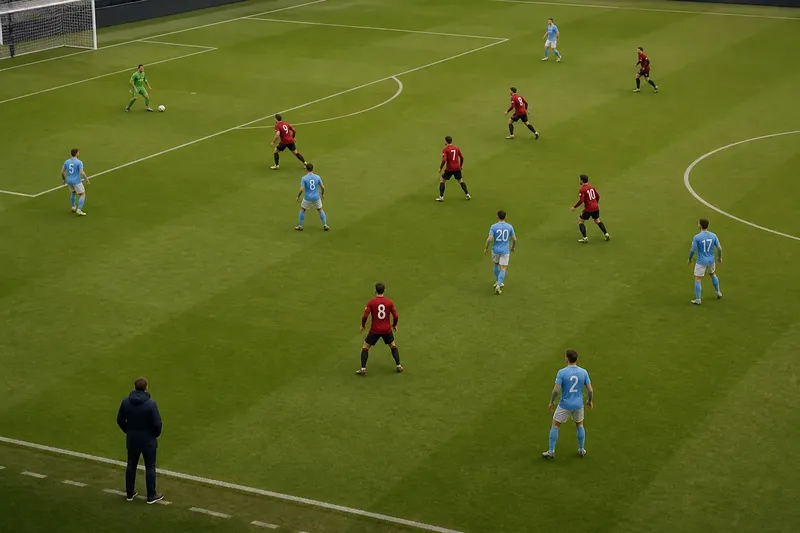
Consider a football pass made under pressure. A player may use the outside of the foot to send the ball around an approaching opponent, while another uses the inside of the foot to play into a nearby teammate. Both actions can serve the same broader skill—passing—but their contact, balance, and follow-through differ because the required path differs.
Look for useful consistency
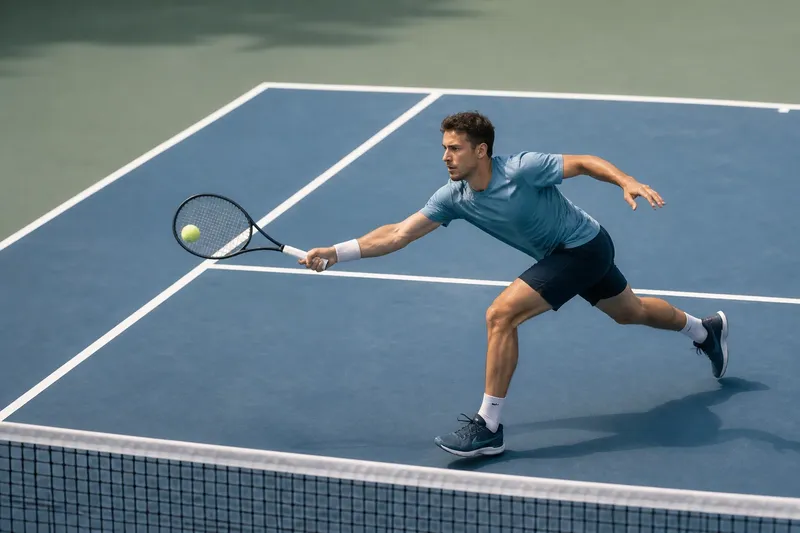
Consistency does not require identical-looking movements. It means the player can produce a useful result across the situations the game presents. A tennis player’s serve, for example, may change in rhythm or toss placement between a flat serve aimed wide and a spin serve directed toward the body. What matters to the observer is whether the action sends the ball on the intended line with the intended challenge.
Watch the outcome and the next action together. Does a volleyball player’s pass give a teammate a workable chance to set? Does a basketball player’s dribble keep the ball protected while creating a route forward? Does a golfer’s recovery shot return the ball to a more manageable position? The movement is easier to understand when you see what it makes possible next.
One useful viewing habit is to compare a player with their own actions in similar situations, rather than immediately comparing them with a different athlete. A taller player and a shorter player may use different leverage or reach; a left-footed player may shape a pass differently from a right-footed player. The relevant question is whether each can meet the task, not whether their silhouettes match.
Read the constraints
Technique is shaped by constraints: the conditions that limit or invite a choice. These include an opponent’s position, the speed of the play, the ball’s bounce, the available space, and the player’s balance. A clean practice demonstration often removes those pressures. Competition puts them back.
In baseball, a hitter may shorten a swing when trying to make contact with a difficult pitch. That movement can look less expansive than a full-power swing, yet it may be a sensible adjustment to the pitch and the situation. In table tennis, a player close to the table may use a compact stroke because there is little time to prepare. The smaller action is not automatically a lesser version; it may be the action the moment allows.
Say you are watching a hockey player receive a pass near the boards with an opponent closing from the middle. The player cushions the puck toward the wall instead of settling it directly in front. That touch may look unusual if judged as a display of control, but its purpose is to keep the puck away from pressure and leave room for the next move. Watch whether the player can continue the play from there.
Separate style from error
Personal style is the visible variation a player brings to a skill. An error is a mismatch between the intended action and what happens. The two can overlap: a player may have an unusual-looking release that works reliably, or a familiar-looking motion that sends the ball astray. Appearance alone cannot settle the difference.
Look for observable signs. Did the player reach the intended target? Was the ball controlled well enough for the next phase? Did the player regain balance or remain ready to respond? These clues are more informative than checking whether an elbow, foot, or torso occupies a supposedly ideal position at one instant.
Still, mechanics are not irrelevant. Repeated loss of control, discomfort, or difficulty adapting may signal that a movement is not serving the player. A viewer can notice that pattern without diagnosing its cause. Sports coaching and individual instruction account for details that a broadcast angle cannot reveal.
What should viewers watch?
Why do athletes use different forms?
Players have different bodies, habits, roles, and options in the moment. The same skill may require a different contact point or body position when the target, pressure, or timing changes.
Can unusual technique still be effective?
Yes, if it helps the player meet the task in the situations they face. Judge the action by its control, purpose, and effect, while remembering that one successful outcome does not explain every part of the movement.
How can I tell a mistake from a style choice?
Watch for the intended result and what follows: control, direction, balance, and readiness for the next play. One imperfect result is not enough to identify a recurring problem or its cause.
Should viewers copy what professionals do?
Professional play offers ideas, not a universal template. A movement that suits an elite athlete’s body, training, and competitive demands may not suit another player; learning technique is best guided by a qualified coach when instruction is needed.
Ignore the freeze-frame
A still image can make a movement seem more certain than it is. In a live play, the player is adjusting through time, and a broadcast camera may hide the pressure or target that shaped the action. A single frame is rarely enough to decide whether a technique was sound.
It is not worth the effort to catalog every athlete’s limb angles or declare a winner in a contest of prettiest form. That kind of comparison can distract from the tactical problem the movement answered. Instead, follow the sequence: what prompted the action, what the player did, and what options remained afterward.
The myth of perfect technique fades when you watch for function across changing situations. Notice the player’s aim, the constraint, and the next available play. Once those details are visible, variation stops looking like a departure from skill and starts looking like part of how skill works.